

-
Sports Bras 16
-
Tank Tops 13
-
Short Sleeve Tops 13
-
Long Sleeve Tops 13
-
Coats & Jackets 6
-
Sweatshirts & Hoodies 8
-
Knitwear 3
-
Shorts 3
-
Tennis Skirts 3
-
Leggings 3
-
Flared Pants 3
-
Wide Leg Pants 8
-
Joggers 3
-
Sweatpants 3
-
Jumpsuits & Bodysuit 8
-
Tennis Dresses 8
-
Activewear Sets 3
-
Plus Size Activewear 3
-
Backpack 3
-
Bag Accessories 5
Compression vs. Encapsulation Sports Bras: Which Is Better?


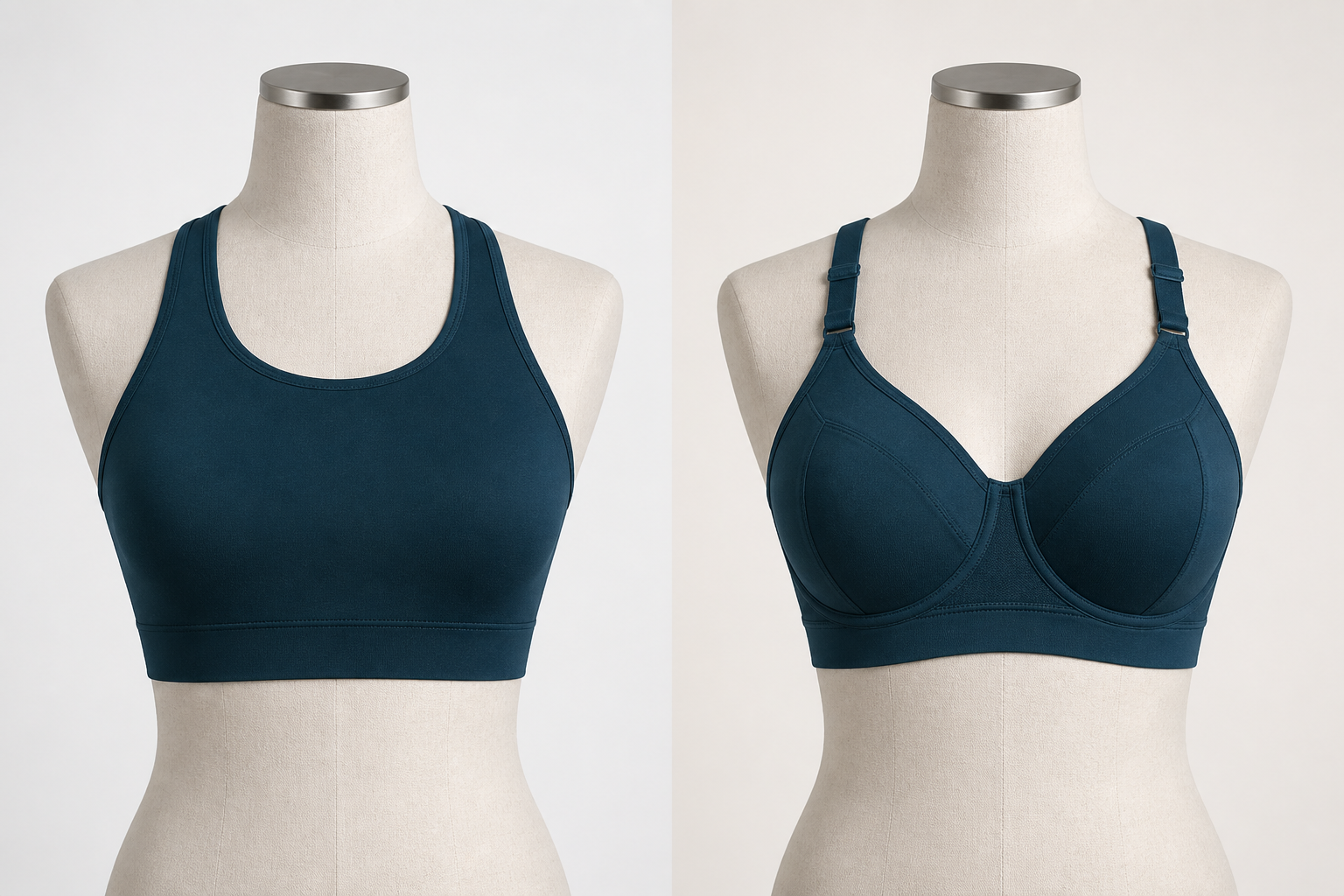
Compression and encapsulation are two common sports bra constructions. Both can provide support, but they control movement in different ways. Understanding the difference can help you choose a bra that feels comfortable for your body and activity.
1. What Is a Compression Sports Bra?
A compression bra holds the breasts close to the chest to reduce movement. It often has a pull-on design and may look similar to a fitted crop top.
- Common benefits: Simple construction, easy layering, and a close-to-body feel.
- Consider: Strong compression may feel restrictive, and some people prefer more separation or shaping.
- Often used for: Yoga, strength training, walking, and other low- to medium-impact activities, depending on the bra’s support rating.
2. What Is an Encapsulation Sports Bra?
An encapsulation bra supports each breast in a separate cup. It may use seams, molded cups, adjustable straps, or a back closure to create structure.
- Common benefits: More separation, defined shaping, and individual cup support.
- Consider: The fit can be more specific, so accurate band and cup sizing matters.
- Often used for: Running, court sports, and other higher-impact movement when the design is rated for that level.
3. What Is a Hybrid Sports Bra?
Some bras combine both methods. They use separate cups for encapsulation and a supportive outer layer for compression. This can provide structure while also limiting overall movement.
4. Which Design Should You Choose?
Start with your activity, then consider your fit preferences. Choose compression if you like a close, streamlined feel. Choose encapsulation if you prefer separation, shaping, or adjustable features. A hybrid can be useful when you want both.
Support level still depends on the full design. Check the underband, straps, closures, fabric, and the manufacturer’s impact rating rather than relying only on the construction name.
5. Test the Bra Before a Workout
Raise your arms, bend, twist, and jog in place. The band should remain level, the straps should stay secure, and the cups should not gap or spill. You should be able to breathe comfortably.
Bottom line: Neither construction is automatically better. The best choice is the one that matches your activity, provides a stable fit, and feels comfortable through your full range of motion.


